
Disability Inclusion Isn’t a Question of If Anymore. It’s a Question of How Fast
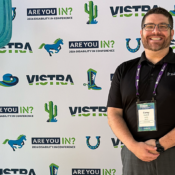
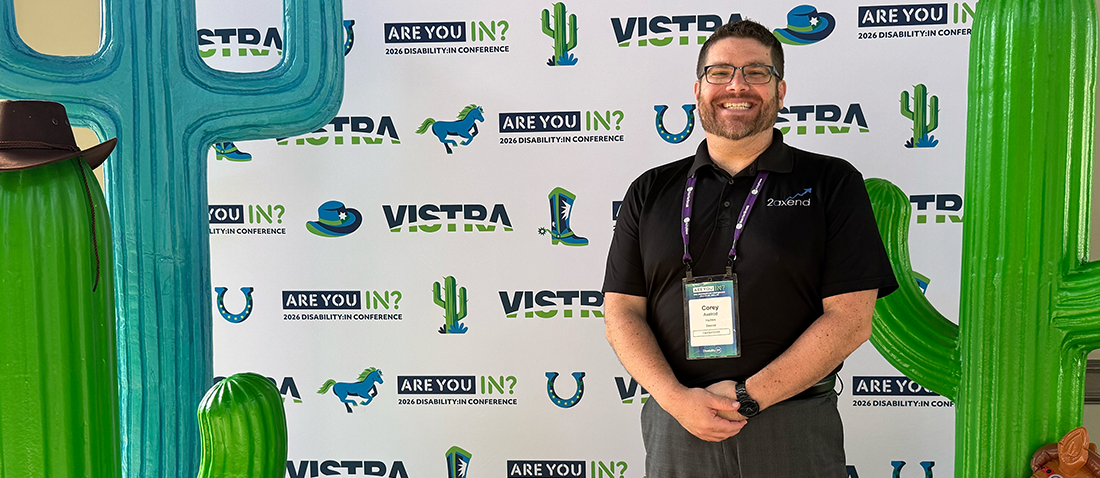
Today is the last day of the Disability:IN Global Conference & Expo. The energy here in Dallas has been building all week and is fitting as we conclude Disability Pride Month.
As I wrap up my 8th Disability:IN Conference, one thing is clear: the conversation has moved past whether disability inclusion matters. The broader conversation this week centered on disability inclusion across the board, but my own conversations kept circling back to accessibility, specifically how organizations can meet the access needs and improve the employee and customer experience of Deaf and hard of hearing people. That is not a niche audience. An estimated 48 million Americans are Deaf or hard of hearing, roughly 1 in 6 people, more than the population of California.
These conversations point to a broader reality. Leading organizations are no longer asking if disability inclusion matters. They are racing to figure out how fast they can operationalize it before they fall behind competitors.
As Ndidiamaka Oteh, Global CEO of Accenture Song, put it during the conference, organizations have to commit to reducing friction for all. That framing matters: accessibility isn't a fix for "them," it's a smoother experience for everyone.
From Patchwork to Infrastructure
This shift from whether to how fast shows the market truly understands the importance of disability inclusion. Operationalizing inclusion means moving far away from reactive, case-by-case accommodations that place an unfair administrative and emotional burden on the individual. Instead, forward-thinking market leaders are baking universal design, accessible communication services, accessible AI tools, and trusted self-identification strategies into their core infrastructure from day one, replacing patchwork fixes at the root.
During the conference, there was an emphasis on integrating technology, AI, talent, and accessibility into overall organizational strategy, rather than treating them as separate conversations. This urgency comes from two forces: a workforce that expects accessibility by default, and a competitive labor market where companies that get this right win on recruiting and retention.
Landon Huber, a managing director in Deloitte's Risk & Financial Advisory practice and Advisory Leader for Deloitte's People with Disabilities and Allies Community, put a finer point on what that integration actually requires: companies "have to be intentional to innovate with, not for" the disability community. That distinction, designing alongside the community rather than on its behalf, is the difference between a patchwork fix and real infrastructure.
It's clear that accessibility is no longer a department's side project, it is a core part of how leading companies plan to grow.
Capturing the $13 Trillion Opportunity
That same commitment to operationalizing disability inclusion also unlocks a $13 trillion market opportunity. When inclusive of family, friends, and caregivers, the global disability community represents an estimated $13 trillion in annual disposable income. This economic reach makes digital and physical accessibility, coupled with authentic representation, a catalyst for customer loyalty, long-term growth, and brand differentiation across every industry.
Driving Action Across the Enterprise
Capturing this opportunity, in both the consumer market and the talent pool, requires looking beyond traditional business benchmarks. Whether ensuring eLearning and video content includes accurate captioning and ASL interpretation, modernizing workplace technology to prevent cognitive overload, integrating accessibility into digital consumer journeys, or strengthening supplier diversity through certified Disability-Owned Business Enterprises (DOBEs) like 2axend, companies are embedding equity into their daily operations.
Yet research from organizations like Valuable 500 shows disability inclusion is still largely absent from standardized environmental, social, and governance (ESG) reporting, with only a small fraction of major companies disclosing disability workforce data at all.
That gap is worth naming: you cannot operationalize inclusion at speed if you aren't measuring where you actually stand.
This work cannot succeed as a one-time pledge. It requires lived experience and rigorous execution to build organizational cultures where accessibility is foundational to everything.
Don't Lose the Human Experience in the Rush to Innovate
There was, understandably, a lot of conversation this week about AI and technology. But the moment that stayed with me most wasn't about a platform or a product roadmap. It was Ed Summers, Head of Accessibility at GitHub, sharing a video he created of himself navigating New York City as a Blind individual with his service dog, Loki. No slide could have communicated what that video did. It was a reminder that behind every accessibility strategy is a lived, daily experience, and that experience has to stay at the center of the conversation, not get lost underneath the technology built to support it.
The Future Belongs to the Inclusive
The future belongs to the inclusive. If your organization is ready to move beyond outdated assumptions and lead in this fast-growing economy, let's connect. At 2axend, we are ready to help you turn conference momentum into lasting business impact.
And here's my hope for next year's conference: more people with disabilities on the main stage, telling our own stories in our own words. Ed Summers showed us what that can look like. Our community talking about our community isn't just powerful storytelling, it's the clearest possible proof point for everything organizations need to build.