November is National Family Caregivers Month.
Employers are paying attention to caregiving. Backup care. Flexible schedules. Paid family leave. Expanded Employee Assistance Programs (EAPs).
The business case is clear. Care.com’s 2026 Future of Benefits Report found that nearly one in four employees have considered leaving the workforce over caregiving challenges, and 23% have already left a job for an employer with better family care benefits.
Caregiving is a retention issue.
But who are these benefits designed for?
Most assume a hearing caregiver, caring for someone who is also hearing. Families with Deaf and hard of hearing members fall through the gaps.
The hearing parent of a Deaf child
More than 90% of Deaf children are born to hearing parents.
The clock starts the day a baby is identified as Deaf. A Deaf baby needs full access to language early. American Sign Language (ASL) gives them that. Every month without it has consequences that follow a child into school, into work, and into adulthood.
That’s language deprivation. I wrote about what it looks like in the workplace in Stop Measuring Deaf Talent in English.
So what does your benefits package offer that parent?
Maybe a cochlear implant. Maybe hearing aids, though many plans barely cover them.
What about ASL classes for the family? Time off for early intervention or Deaf mentor visits? An EAP counselor who understands what that family is facing?
The parent needs a language. At best, benefits hand them a device.
When the caregiver is Deaf or hard of hearing
Now flip it.
I watched my father care for my grandmother. She was hearing. He was Deaf.
Every appointment, every hospital visit, multiple rehab stays, and a nursing home. Each one came with a fight for communication access. He was her caregiver. He still had to fight to be included in her care.
Today, many Deaf adults in my generation are facing the same thing as our parents get older.
A Deaf friend told me this week that he recently left his job. His employer asked if he really had to be at his child’s doctor’s appointment.
He did. So he left.
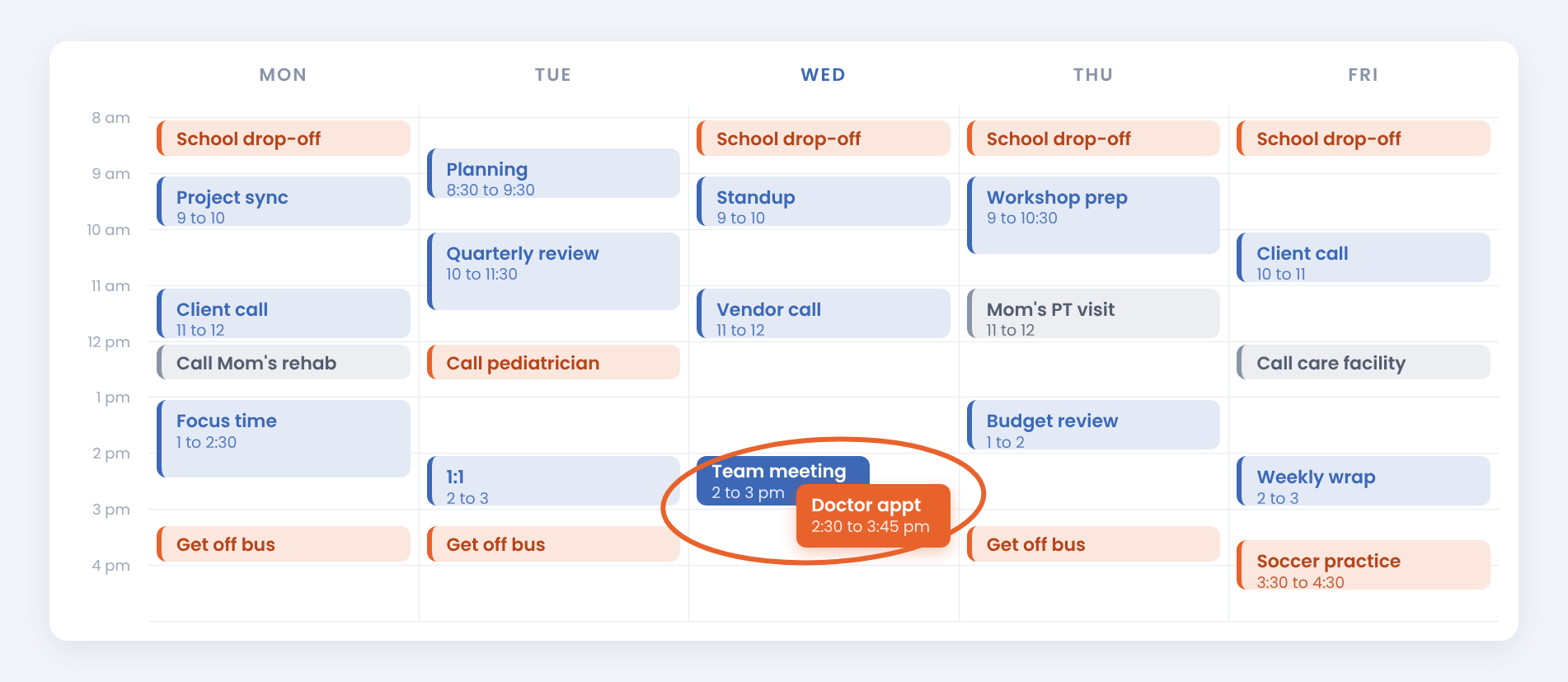
Picture another Deaf or hard of hearing employee caring for a parent, a spouse, or a child. They open the benefits portal. The caregiver webinar has no captions. The EAP line is voice only. The support group meets on a call with no interpreter or captions.
The benefit exists. They just can’t use it.
That isn’t support. That’s a line item.
Where to start
Ask your Deaf and hard of hearing employees, and employees with Deaf or hard of hearing family members, where your caregiver benefits fall short. They already know.
Make it safe for them to answer. My friend’s employer questioned one appointment. Your Deaf and hard of hearing employees should never have to wonder if you’ll do the same.
Then look at what you offer through their eyes.
Caregiving and communication access overlap in ways that are easy to miss. Bring in people who know what to look for.
The bottom line
Caregiver benefits work when caregivers can actually use them.
If your program assumes everyone hears, it leaves out the families who need support the most. The same goes for any program that assumes everyone sees, walks, or processes information the same way.
This month, look at your caregiver benefits through a Deaf lens.
Need help finding the gaps? Let’s connect.