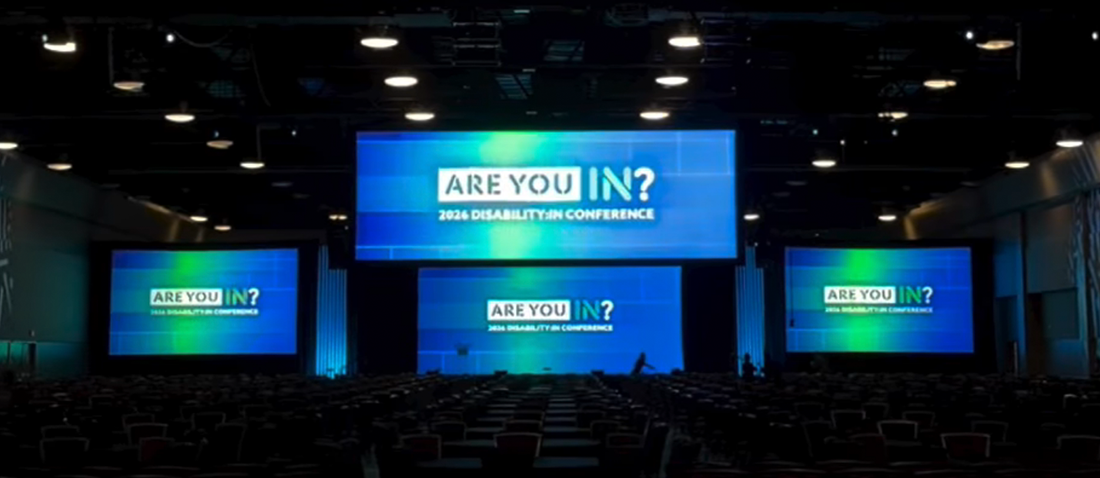
Last week I wrote that the Disability:IN Global Conference and Expo proved again that disability inclusion isn't a question of if anymore, it's a question of how fast. This week, I'm writing about thirty seconds on the conference main stage, two words, and why they mattered.
The Moment
During a main stage conversation with a prominent Disability:IN leader, a presenter used the term "hearing impaired" about 30 seconds into their discussion. A friend and fellow attendee and I looked at each other. Neither of us said a word, but we both knew. I was checked out for the rest of their time on stage and kept thinking about how many people in that room just heard the wrong message.
Why the Word Matters
"Hearing impaired" is widely considered outdated because it defines people by what they can't do instead of who they are. Most Deaf and hard of hearing people prefer exactly those terms: Deaf or hard of hearing. One's a limitation. The other's an identity.
Research on other disability terms backs up why this matters beyond politeness. Studies on ableist language have found it shapes how nondisabled people actually think about and treat disabled people, not just how the moment sounds on stage.
I don't think this presenter meant any harm. But the impact reached well beyond that moment on stage, especially as more than 3,000 people were watching.
Beyond One Word
This isn't only about "hearing impaired," and it isn't only about Disability:IN. The same scrutiny should apply to slurs, dehumanizing language, pity framing, and condescending euphemisms across every disability community. Whatever form it takes, the problem is the same: it centers what someone can't do instead of who they are.
And it's not just a conference problem. Any organization that puts someone in front of an audience to talk about disability runs the risk of language that undercuts the message, whether it's a keynote, a panel, a training, or a town hall.
What Needs to Change
This presenter was likely chosen by their organization to represent its disability inclusion work. I don't know if they have a disability themselves, and that's not really the point. The point is they were put in front of a room at one of the largest disability inclusion conferences in the world, and the language didn't match the message. Here's what would close that gap:
- Disability:IN should give every mainstage and breakout presenter a language primer. Not just preferred terms, but slurs, dehumanizing language, and condescending euphemisms too.
- Organizations sending people to speak publicly need to prepare them to that same standard, so whoever's on stage reflects the culture the organization says it's building.
Unfortunately, the first suggestion isn't new. I raised it with Disability:IN leadership more than five years ago. Their answer then was that their approach is to educate one person and one organization at a time, through disability etiquette sessions that make recommendations to use preferred language.
I understand the intent, and I believe it's done in good faith. But five years later, the same issues persist. At some point it's fair to ask if one-person-at-a-time education is actually closing the gap, or just making it easier to say “we tried.”
I say this with respect: dancing around the issue won't land anymore, not with a community that's been patient for years. A primer for every presenter isn't a bigger ask than what's already happening. It's the same intent, just built into the process instead of left to chance.
The Ripple Effect
The impact of those two words didn’t stop with Deaf and hard of hearing attendees, though we felt it first. It landed on employees at that organization who have been working internally to build cultural understanding. One outdated phrase can undo months of that work in about 30 seconds.
This isn't about calling out one person. Language is infrastructure. And it starts with making sure everyone who steps on stage is ready.
If your organization is preparing anyone to speak publicly about disability, let's talk. At 2axend, we help organizations build that preparation into the process, so the message and the language actually match.