
The Power of Three Words: Acculturation is Dynamic.
Acculturation (n): The process of balancing two cultures.
Simply put, acculturation is the blending of cultures through shared experience. It isn’t about "disappearing" into a new group—that’s assimilation. Instead, it’s about adopting new traits and customs while fiercely preserving your original identity.
When this balance is successful, it leads to Biculturalism. This is the ability to fluently navigate two different worlds—switching between language and social norms without losing your sense of self.
In this post, we approach acculturation from the lens of how Deaf and hard of hearing individuals navigate the hearing world. We’ll explore what it looks like to be bicultural and bilingual in a society that often expects you to choose just one.
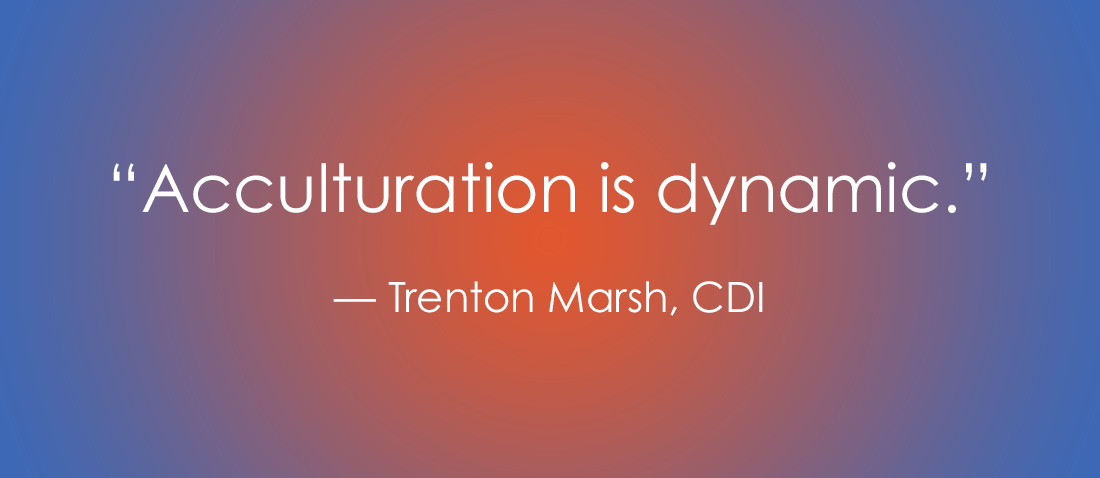
This week’s inspiration: "Acculturation is dynamic."
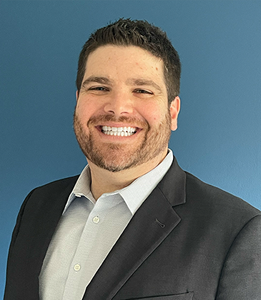
When Trenton Marsh, CDI, shared this insight during a panel discussion at last week's Deaf and Hard of Hearing Experiences in Healthcare Summit, I immediately wrote it down. As the moderator, I felt the weight of those words. In just three words, Trenton communicated a profound truth about how our community accesses the world. For us, acculturation is not a destination. It is a constant, fluid response to our environment.
The Myth of the "One-Way Street"
Most hearing individuals view acculturation as a one-way process: the Deaf or hard of hearing individual is expected to adapt to fit the "hearing world."
This perspective assumes hearing norms are the universal standard, rendering the immense effort required to meet those standards invisible. Trenton’s take flips this script:
- Adaptation as Labor: Navigating a hearing environment is not a passive state, but a continuous, exhaustive form of invisible labor. We are often socially and professionally obligated to “bridge” a gap we did not create.
- The Fluidity of Access: Our use of ASL, spoken English, and/or hearing assistive technologies (e.g., hearing aids/cochlear implants or real-time captioning) represent a dynamic negotiation with our surroundings.These are not “fixes for a deficit” but communication preferences contingent on available supports.
- Code-Switching as Strategy: Shifting between linguistic frameworks is a sophisticated, strategic maneuver. This mastery of moving from visual to auditory processing is a sign of high-level competency, not a loss of identity.
- The Well-being Tax: The relentless pressure to maintain hearing norms extracts a heavy toll, often resulting in a state of "proximity without belonging." When the burden of communication is never shared, this identity fatigue eventually erodes self-worth.
Leadership Excellence Rooted in Cultural Humility
Leadership excellence requires cultural humility—the recognition that proximity to a community is not the same as living its reality. While family members—including Children of Deaf Adults (CODAs), siblings, or spouses—offer vital perspectives, true humility acknowledges that observing a struggle is not the same as navigating it personally.
To lead effectively, one must honor this gap by committing to lifelong listening and respecting an individual’s autonomy to define their own needs.
Impact Across the Board
When professionals embrace the dynamic nature of cultural humility, the baseline “standard of care” transforms:
- Workplace: Organizations prioritize employee wellbeing. The hearing majority also acculturates—learning our norms rather than placing the entire burden of change on the Deaf and hard of hearing individuals.
- Healthcare: Providers prioritize listening over speaking, adjusting their communication approaches as needs evolve, especially during crises.
- Education: Educators support the whole person, recognizing that Deaf and hard of hearing students develop a sense of identity alongside their academic growth.
Final Thoughts
Trenton’s words serve as a compass. The goal shouldn't be to "master" our culture, but to remain curious and connected to our lived realities.
Our identities are in motion—we ask that you move with us.
Ready to move toward true equity?
At 2axend, we partner with organizations to bridge the gap between awareness and action. Let’s work together to transform your organization’s approach to cultural humility.
Recent Posts
Awareness Is the Beginning, Not the Goal
Awareness Month Isn’t Enough