My twin six-year-old boys start first grade today.
Earlier this week, we squeezed in one more summer adventure: a trip to the movies to see Paw Patrol: The Dino Movie. No spoilers, but prepare for your kiddos to cling to you.
For my boys, it was a fun afternoon at the movies. For me, as a Deaf parent, it became another reminder of the gap between providing access and actually creating an accessible experience.
Check the Box: ADA Compliance
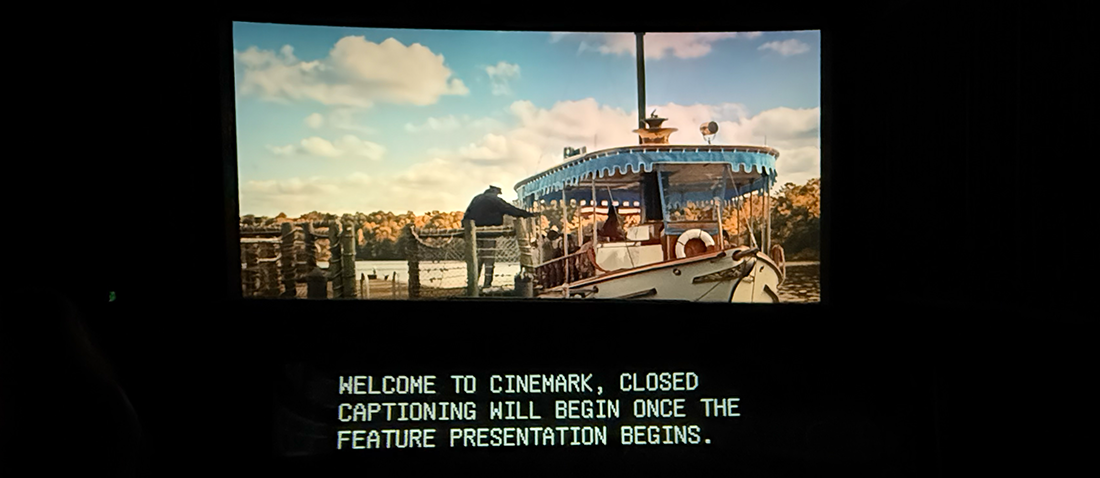
The theatre had a CaptiView device available, one that fits into the cup holder and has a flexible arm that displays closed captioning
Check the box. ADA compliance.
Except the device was terrible.
It took a couple of minutes to position it properly in the cup holder.
And before the movie even began, the commercials and previews came on. They weren’t captioned.
My six-year-olds were watching the screen and explaining to me what the commercials were about. They saw movies they wanted to see. They were excited and engaged.
I was already missing out, and the "feature presentation" hadn’t even started.
Then the movie began. And the device fell three times.
Each time, I had to stop watching, reach down, struggle to position it properly again, and try to get back to the movie.
I was sitting there trying to follow along through a device that kept falling.
How's That Functional Equivalence?
This is where the conversation about accessibility needs to go beyond compliance.
The question to ask isn't: Was a captioning device provided?
The question to ask is: Did I have a substantially equivalent opportunity to experience the movie?
Everyone else in that theatre could look at the screen.
I couldn't.
They could watch the previews and commercials without thinking about whether they were missing information.
I couldn't.
They didn't have to manage a piece of equipment throughout the movie.
I did.
And when that device fell for the third time, the difference between having access and actually experiencing access became pretty obvious.
Accessibility Is About the Experience
This is why I get frustrated when accessibility is treated as a checklist.
A theatre can have a captioning device.
A healthcare organization can have a video interpreting device.
A company can have an accessibility policy.
But none of those things automatically mean someone has an equitable experience.
Access isn't about whether something is technically available. It's about whether it actually works.
My boys didn't have to think about accessibility that day. They just got to be six-year-olds at the movies.
I was the one navigating the barriers.
And honestly, that's the part that sticks with me as they start first grade today.
We can do better than checking the box.
Because if the experience isn't functionally equivalent, how accessible is it really?