
Awareness Is the Beginning, Not the Goal
Last week, I wrote about something I've always struggled with: awareness months.
Not just Deaf Awareness Month. All awareness months.
I've always felt conflicted about the idea of dedicating a month to "raising awareness." Awareness is important, of course. But I've wondered whether simply making people aware of something is enough to create meaningful change.
Awareness Isn't the Goal
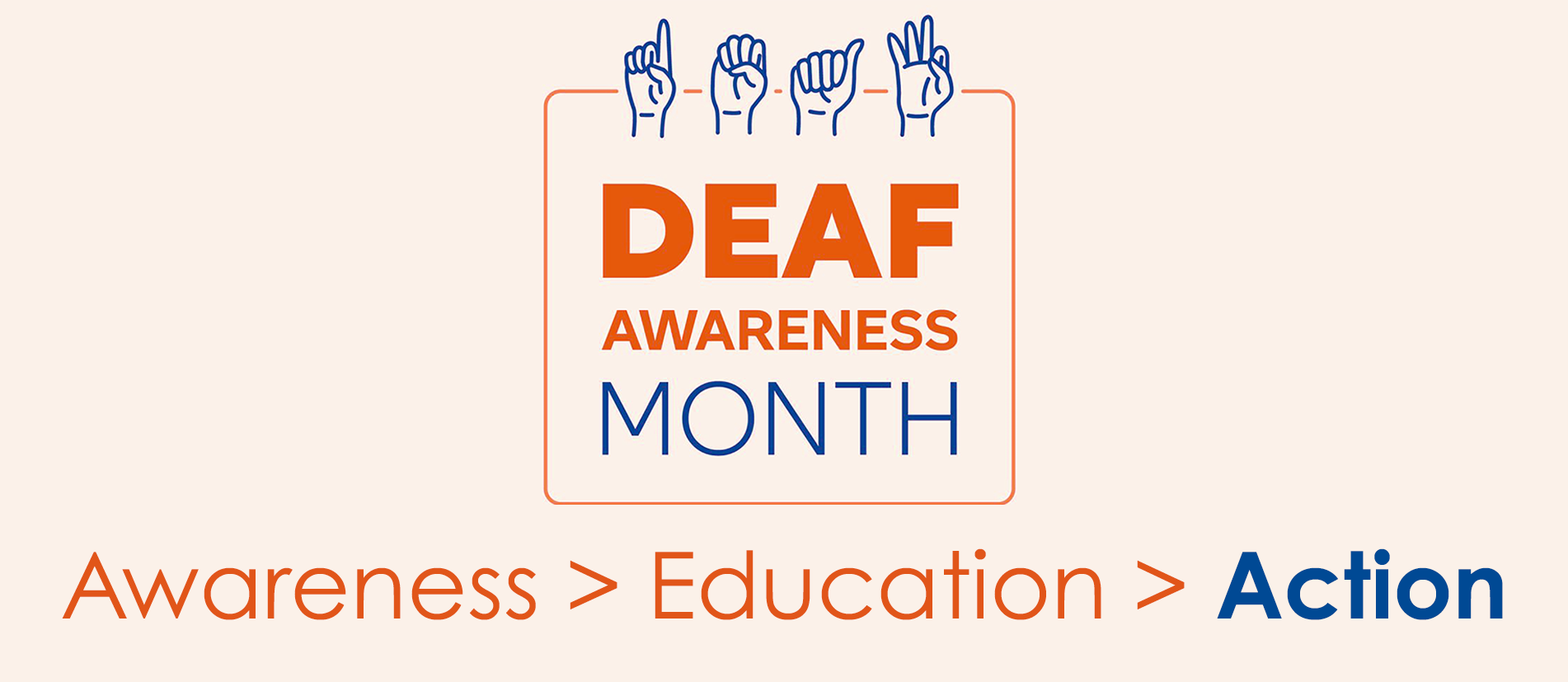
Maybe the ultimate goal of Deaf Awareness Month shouldn't simply be about raising awareness.
If someone finishes September knowing that Deaf people exist, have we really accomplished much? And what happens on October 1?
What if, instead, they finish September understanding something they didn't understand before?
Maybe they learn that American Sign Language is a language, not a collection of gestures or "English on the hands." Maybe they learn that not every Deaf person communicates the same way. Maybe they learn why captions matter, why facing someone when speaking is important, or why saying "Never mind" when communication gets difficult can be incredibly frustrating.
That's where most conversations about awareness stop.
There's a harder awareness we don't talk about enough: what it actually costs when access fails. A broken process. A missed accommodation. A system that wasn't built with a Deaf person in mind, and the real cost that lands on them when it isn't.
That's education. And education can lead to something even more important: action.
From Awareness to Action
Awareness says, "Deaf people exist." Understanding says, "I have a better sense of what their experiences can be." Action says, "Now I'm going to do something differently."
And that action can happen at several levels. Sometimes, it's physical or sensory: the environment needs better visual communication, captions, visual alerts, or a different way of delivering information. Sometimes, it's attitudinal: we need to challenge assumptions about Deaf people, communication, competence, or what inclusion actually looks like. Sometimes, it's systemic: policies, processes, and workflows need to change so access is built into how an organization operates, rather than treated as an exception.
These areas aren't separate. They're interdependent. A physical barrier can reflect an attitudinal assumption. An attitudinal barrier can be reinforced by a policy. And a policy can appear inclusive while the environment and the people implementing it continue to create barriers.
Why Action Matters
When access fails, someone pays for it. As a Deaf person, I know what it's like to miss out on information.
This is often a byproduct of organizations not thinking through or planning for what happens if an interpreter arrives late, the captions glitch, or the visual alert fails.
These aren't hypothetical situations. I've lived them, more than once.
As I wrote in a January blog post, the Video Remote Interpreting (VRI) connection froze during pre-op before a cardiac-related procedure. When I connected with hospital leadership after the fact, they had no idea it happened. Ultimately, as there was no process for staff to report a device failure, the equipment was never fixed because nobody knew there was an issue.
With this in mind, simply asking "Did we provide an accommodation?", "Do we have a policy?", or "Are we compliant?" is not enough. Instead, we need to be asking, "Did this create meaningful access for the person who needed it?"
Simply creating awareness isn't going to cut it. At the end of the day, the cost of getting access-related initiatives wrong doesn't land on the organization. It lands on the person who needed access and didn't get it.
What This Month Could Be
Not another month where we ask people to be aware. A month where we invite people to learn something new. A month where we encourage curiosity instead of guilt. A month where Deaf people get to share our language, culture, experiences, humor, history, and perspectives.
Maybe the question is: what are we going to do with the awareness once we have it?
Meaningful action means addressing accessibility barriers wherever they exist: examining the physical environment, challenging attitudes, improving policies and processes, testing whether accommodations work in practice, and listening when Deaf people say they don't.
And it means co-creating those solutions with the Deaf community, not creating them for us. Solutions built without the people who'll use them tend to fail the same quiet way documentation does: they look complete until someone actually needs them to work.
When we remove those barriers, we create environments where people can participate, communicate, contribute, and belong. That's genuine inclusion.
Awareness is the beginning. Inclusion is the goal.
Recent Posts
Deaf Interpreters Belong in the Workplace Too

Stop Measuring Deaf Talent in English