
Presence vs. Efficacy: Is Your Accessibility Strategy Actually Working?
In last week’s reflection on the AHA Healthier Together conference, I made the case for a shift in how we collect disability data. But data collection is only the first mile. The greater hurdle is translating those data points into measurable clinical success. As we move into an era of value-based care, the stakes have never been higher—yet most organizations still operate in a model that measures presence, not performance.
The Compliance Trap
If we continue to rely on the binary, one-dimensional data sets I discussed last week, we will inevitably remain trapped in a compliance-only mindset. The traditional model of healthcare accessibility asks a binary question: Was an accommodation provided?
In this framework, success is defined by the existence of a resource. Did the interpreter show up? Is the ramp in place? While these are necessary baselines, they are fundamentally "checkbox" metrics. They satisfy a legal requirement, but they fail to capture the patient’s actual experience or the clinical outcome.
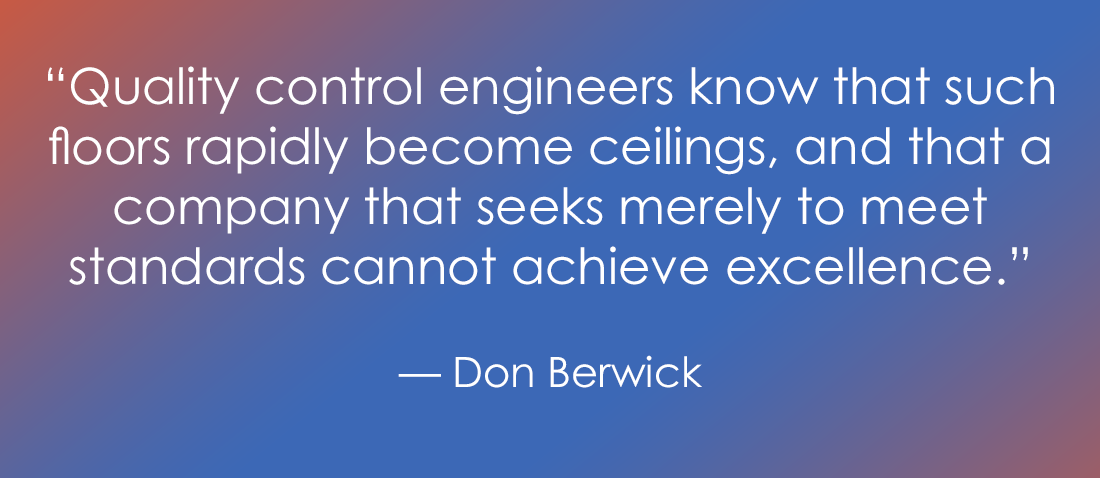
As Don Berwick, the former administrator of CMS, once warned: "Quality control engineers know that such floors rapidly become ceilings, and that a company that seeks merely to meet standards cannot achieve excellence." When we prioritize minimum compliance in our accessibility strategy, we are setting a ceiling that prevents us from ever reaching the patient.
This is most visible when organizations treat accessibility as a commodity to be bundled for cost-savings. When ASL interpreting is grouped into a "general translation/language services" package to secure the lowest bidder, the focus shifts to price rather than clinical efficacy. This often leads to the over-reliance on Video Remote Interpreting (VRI) in clinically inappropriate scenarios—such as high-acuity consultations or triage. Furthermore, technology is not infallible; as I have written about previously, VRI platforms frequently suffer from connection drops and hardware failures that render them useless during critical moments. In these instances, the use of VRI is duly notated in the EMR as "provided," but the communication is failing.
In a value-based care environment, relying on presence alone is a clinical and financial risk. An accommodation can be "present" but entirely ineffective. You have satisfied the auditor, but you have failed the patient—increasing the risk of medical error, decreasing patient trust, and jeopardizing the very outcomes you are trying to measure.
Moving Toward Impact Metrics
To protect your bottom line and drive health equity, the conversation must transition from compliance to efficacy. In a value-based care landscape, an ineffective accommodation is a clinical safety incident. By shifting our focus from the provision of services to their efficacy, we move toward a proactive model. We must correlate the quality of access with:
- Clinical Safety: Does the accommodation impact a patient’s ability to follow discharge instructions?
- Preventable Utilization: Are patients experiencing higher readmission rates due to navigation or communication failures?
- Operational Efficiency: How do gaps in accessibility drive up the "Self-Advocacy Tax" and administrative friction?
Addressing the Nuance
When we treat disability as a monolith, we obscure the nuances that drive health outcomes. Moving beyond the "Compliance Trap" requires KPIs tailored to diverse needs.
A "one-size-fits-all" approach obscures the disparities you are trying to solve. For example, a KPI measuring "interpreter response time" is critical for a Deaf patient, but irrelevant for a patient with a mobility disability whose barrier is physical infrastructure. By disaggregating our data and aligning KPIs with specific functional needs—communication, mobility, or cognitive support—we move from generic metrics to insights that actually improve clinical quality.
Defining the Path Forward
Defining the KPIs that move your organization from the "Compliance Trap" to clinical equity is where the true work begins. It requires an intentional framework that connects data, outcomes, and operational workflows.
If your system is ready to move beyond the checkbox and finally link your accessibility efforts to the clinical outcomes that define value-based care, I welcome the opportunity to discuss how we can build that infrastructure together.
The future of equitable healthcare is measurable. Let’s measure what matters.

Recent Posts
Deaf Interpreters Belong in the Workplace Too

Stop Measuring Deaf Talent in English